GroupTrip
Master's thesis, create a platform with an open them, in this case about traveling.
More and more young people are eager to travel, but most of them prefer to do so in groups. While group travel has many advantages, it also comes with challenges, particularly when it comes to organizing and deciding when and where the next adventure will be. But things can change, can't they?
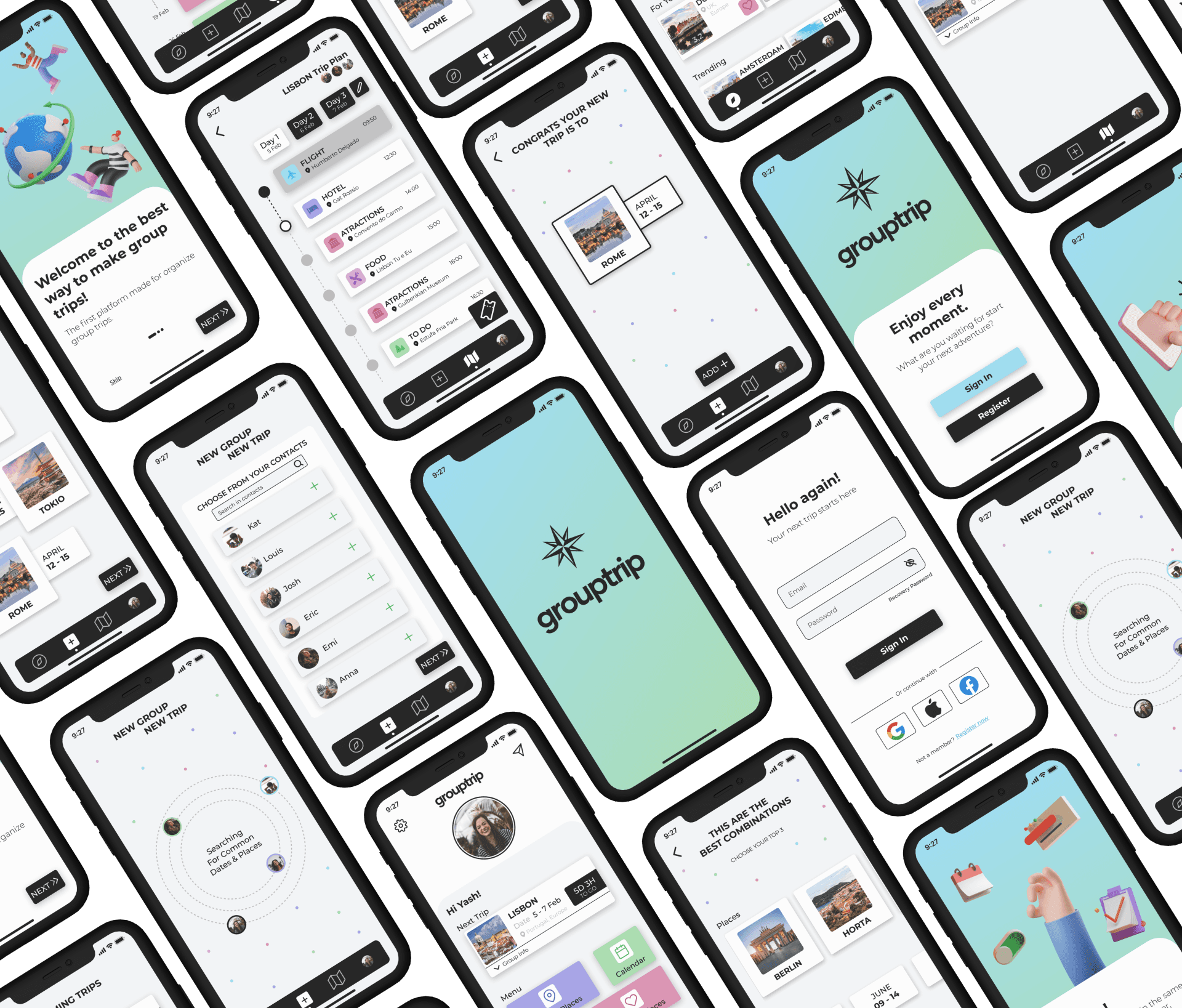
GroupTrip is the only platform designed specifically for planning group trips, featuring collaborative planning and a minimalist design to focus on what truly matters: traveling.
Planning a trip has never been easier.
Rol
UX/UI Designer
Tools
Figma | Whimsical |
Timeline
4 Weeks
Skills
UX Research | UI Design | Design Thinking
Research
The research began with desk research to understand how people travel, followed by netnography to identify the most popular travel platforms. This groundwork informed the creation of the research question, which was categorized into three key areas: users, apps, and functionalities.
Next, we conducted a benchmarking analysis with a strong visual approach, allowing us to identify how our app would stand out from existing solutions in the market and what unique value it could bring.
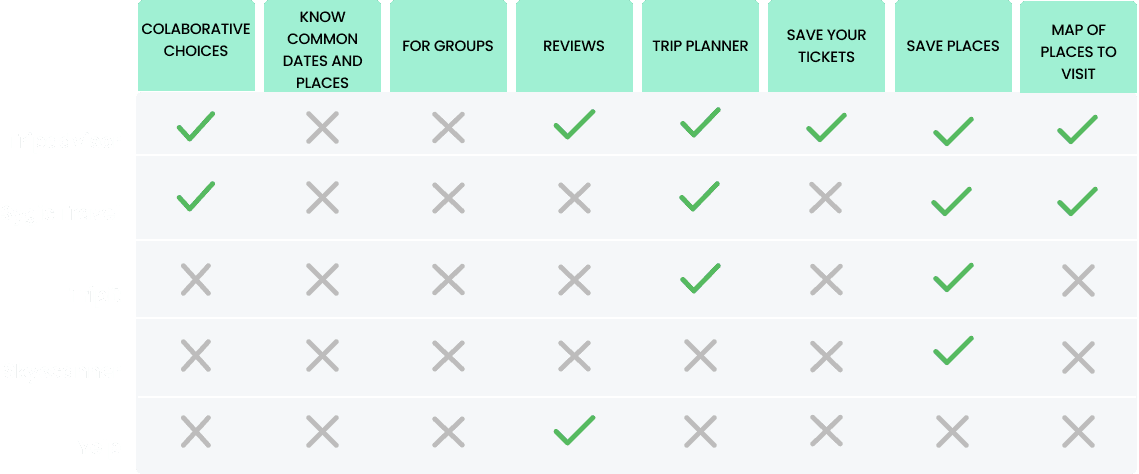
Key insights from this phase included:
There are no apps dedicated solely to group travel.
Very few platforms support collaborative trip planning.
Young people tend to travel more frequently and in groups.
At this point, the concept became clear. The next step was to conduct a SWOT analysis and a survey targeting young people to better understand their travel behaviors and needs.
Insights
Who are our users? How do they travel?
Our primary users are young people aged 18–35. What mattered most was understanding their travel habits and the challenges they face, so we could address their specific pain points.
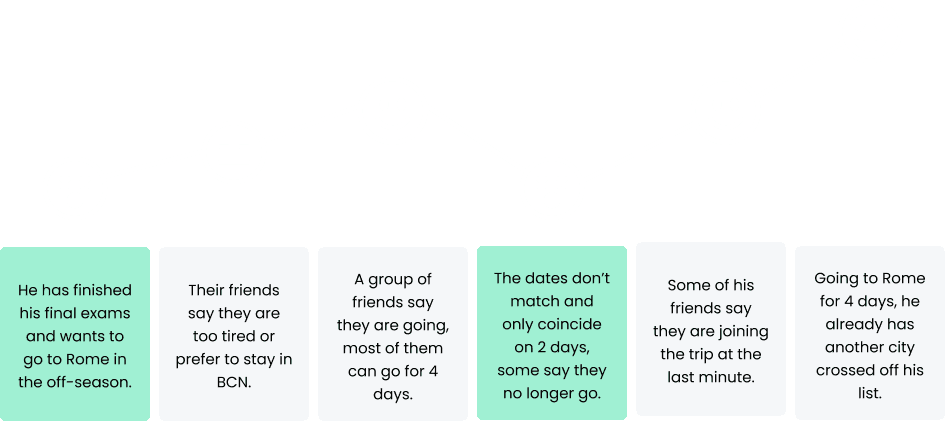
Using user personas, empathy maps, customer journeys, and pain point analysis, we identified what a typical user needs and wants. This approach allowed us to guide the next phase of the process with clear, actionable insights.
Ideation

Based on this research, I created a table of Findings and Insights, which highlighted the need for a multi-functional app to support both trip planning and the travel experience itself.
With these insights, we started narrowing down the best features to include in the app.
The first step was a Priority Matrix, which helped us identify the most useful and viable ideas.
The selected features were then further refined using In-Out and MoSCoW prioritization frameworks.
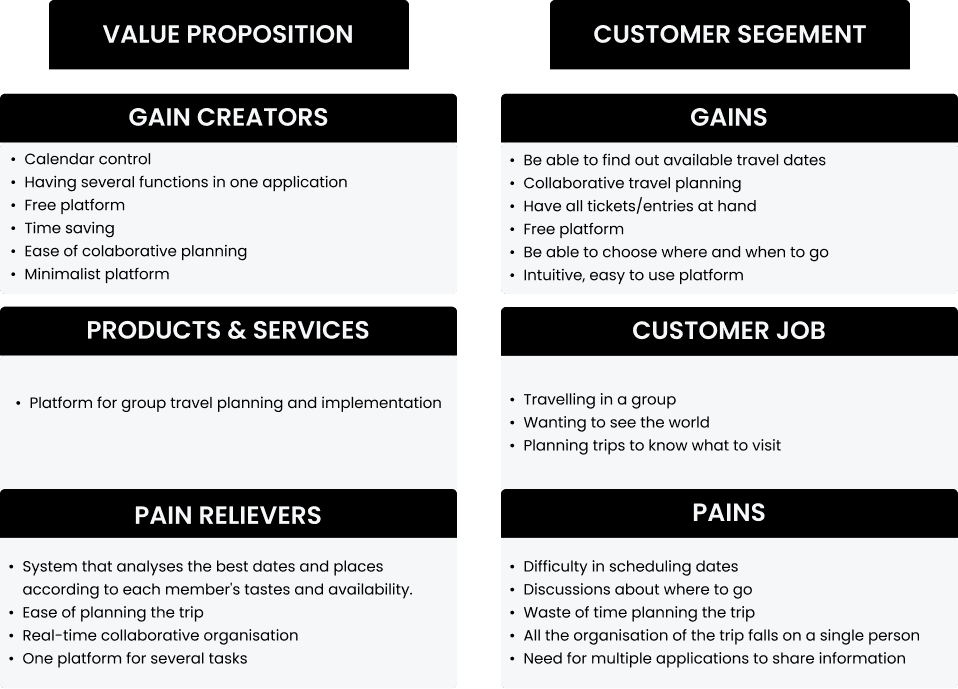
We followed this with a Value Proposition and a Business Model to solidify the app’s unique offering and market potential.
Design
We came to the development of the ideas and elaborated a real prototype.
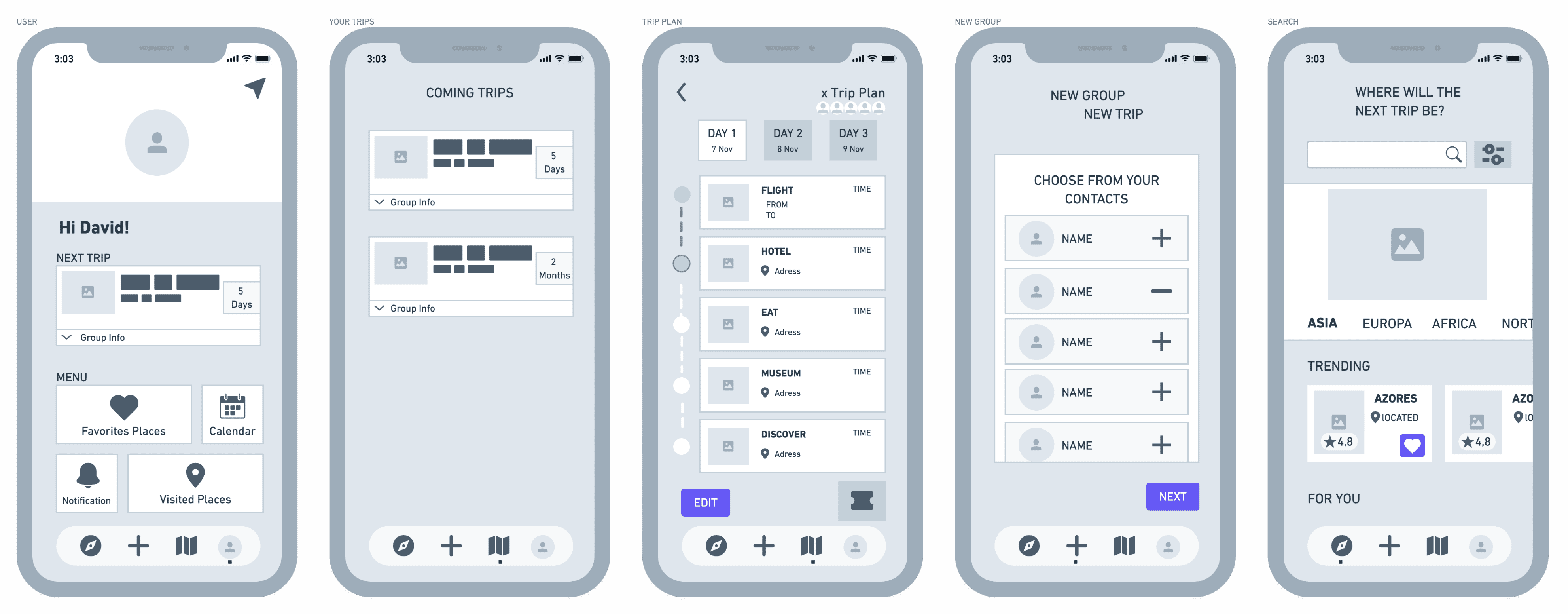
To develop the app’s structure, we created a site map and user flowchart to visualize how users would interact with the platform. Once the architecture was in place, we designed Mi-Fi wireframes to outline the app’s functionality.
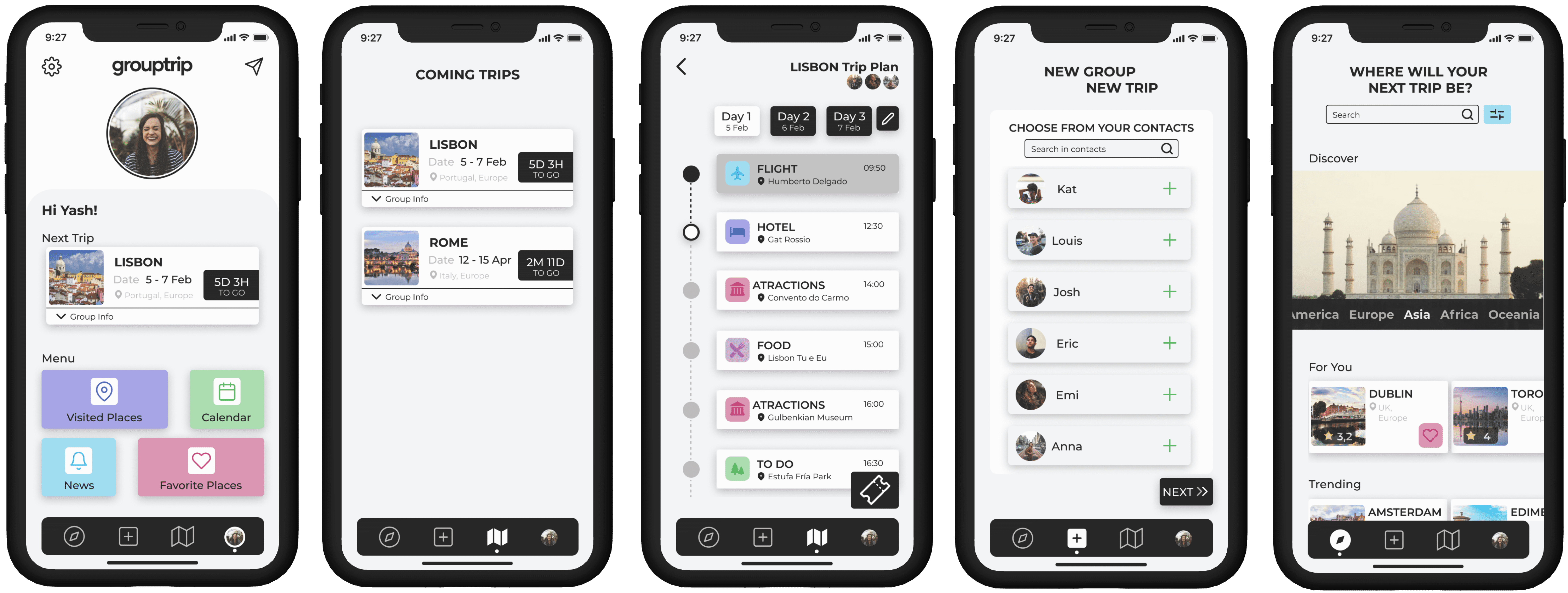
Next, we worked on the visual identity, choosing colors (validated through accessibility tests to meet WCAG AAA standards), typography, and designing the logo and design system in Zeroheight.
Finally, with the visual identity established, we created Hi-Fi wireframes and the final app prototype to bring the concept to life.
Outcomes
To ensure the product is user-friendly and easy to navigate, I conducted a usability test with 32 participants.
This test was carried out using Maze and included users aged 18–35. The goal was to identify and refine aspects of the application that required improvement.
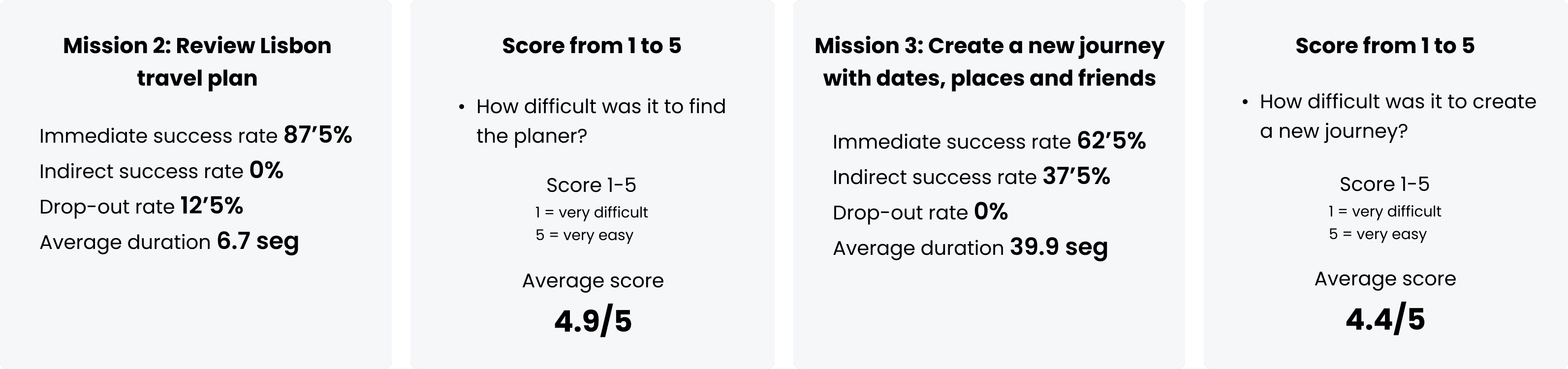
The results were highly positive, with users appreciating the ease of completing various tasks and quickly understanding how the app works.